

In short: Renting a storage unit during a divorce is a neutral interim solution: furniture and household contents stay safe until the division is settled. An external self storage unit reduces the chance of tension in the marital home. At Flexistock (Grondelstraat 162, 1070 Anderlecht – Brussels South), units are monitored 24/7, secured and well lit; for more information call 0800 300 27 or visit flexistock.com. Only remove goods by mutual agreement and record the temporary storage in writing to avoid accusations of goods being misappropriated.
A divorce is a major life event, and the emotional process comes with dozens of practical knots to untie. Who stays in the family home? Where do the furniture and belongings go? And how do you keep cherished possessions intact while no final agreement is on paper yet?
In the search for control and breathing space, many people consider renting a storage unit during the divorce. Simply moving belongings out of the marital home can, however, have legal consequences. In this article you will read how thoughtful external storage in the Brussels region creates calm and lets the division of your household contents run in an orderly way.
*Please note: this article offers practical information only and does not replace legal advice from a lawyer, notary or accredited mediator.*
1. The legal nuance: a neutral storage unit instead of hiding belongings
In stressful situations the impulse can arise to discreetly move personal or disputed items out of the house. The idea of a 'secret' storage unit can be tempting, but extreme restraint is required.
For joint or disputed goods, sit down together with your lawyer or mediator: how the matrimonial property regime works differs from one situation to another. Moving goods without agreement can work against you legally and weaken your position in the later division.
If the items are demonstrably your own possessions (clothing, documents), a private unit offers a calm place for a private moment with your own belongings. For joint property, external storage is above all a constructive buffer zone on neutral ground.
The constructive solution: neutral ground
By moving furniture and boxes to an external self storage facility you:
take the day-to-day emotional tension out of the marital home.
create physical space for the partner who stays in the house, or make the property quicker to put on the market and ready for viewings.
have a safe storage place outside the home, keeping the chance of damage and disagreements small.
can – if agreed – both get access to the unit to ensure transparency, or have access managed through your mediator or notary.
2. Renting a storage unit during a divorce or keeping your belongings at home?
Do you and your partner keep living under the same roof for a while, or does the household contents stay behind pending the sale? The matrix below compares both situations.
**Emotional strain — Keeping belongings in the family home: High: daily confrontation with shared belongings. — Renting neutral storage (e.g. at Flexistock):** Low: a decluttered living environment, a neutral zone outside the home.
**Making the home sale-ready — Keeping belongings in the family home: Difficult: cluttered rooms hinder photos and viewings. — Renting neutral storage (e.g. at Flexistock):** Optimal: decluttering makes the property presentation-ready.
**Safety of belongings — Keeping belongings in the family home: Vulnerable when arguments escalate or one party removes goods without permission. — Renting neutral storage (e.g. at Flexistock):** Reliable: 24/7 monitoring, secure access and well-lit facilities.
**Flexibility when moving — Keeping belongings in the family home: Tied to strict handover dates. — Renting neutral storage (e.g. at Flexistock):** Excellent: move in manageable stages.
3. Step-by-step plan: storing furniture and belongings during a divorce
In practice, logistical choices are often made under time pressure. This step-by-step plan helps you avoid mistakes and extra conflict.
[1. Inventory] ➔ [2. Agree in writing] ➔ [3. Estimate volume] ➔ [4. Choose a facility] │ [5. Access management] ➔ [6. Pack thoughtfully] ➔ [7. Transport & moving in] ➔ [8. Winding up]
Step 1: Make an objective inventory list
Walk through the house together or with a family mediator. Note every piece of furniture and appliance with a short description and photograph their current condition: the objective basis for the later division.
Step 2: Put written agreements in place about the temporary move
Agree on paper in advance that the move to a storage unit is purely a conservatory measure and no anticipation of the final allocation of ownership. A simple signed document or a confirmation via your lawyers helps to remove suspicion and reduces the risk that the move is interpreted as one-sided appropriation.
Step 3: Determine the storage volume you need
Estimate the required capacity carefully to avoid unnecessary rental costs or a lack of space on moving day. Use the online storage unit comparison to determine whether a compact unit suffices or whether you need a spacious storage unit for a complete household. Dismantled wardrobes, tables and bed frames take up considerably less volume, so you can often manage with a smaller unit.
Step 4: Choose a suitable, secure self storage facility
Look at location and amenities: choose an easily accessible site in Brussels South with 24/7 monitoring, secure access and good lighting. Ground-floor units make loading heavy furniture lighter and faster.
Want to create breathing space right away?
Want to know straight away which unit suits your situation? You can book contactlessly online at flexistock.com, or call 0800 300 27 free of charge for calm, no-obligation advice.
Step 5: Lay down access rights in the contract
Agree in advance who signs the contract and who has physical access. With a personal unit you manage access yourself; with shared goods, agree that the unit is only entered when both parties are present and record the management in writing, possibly through your mediator.
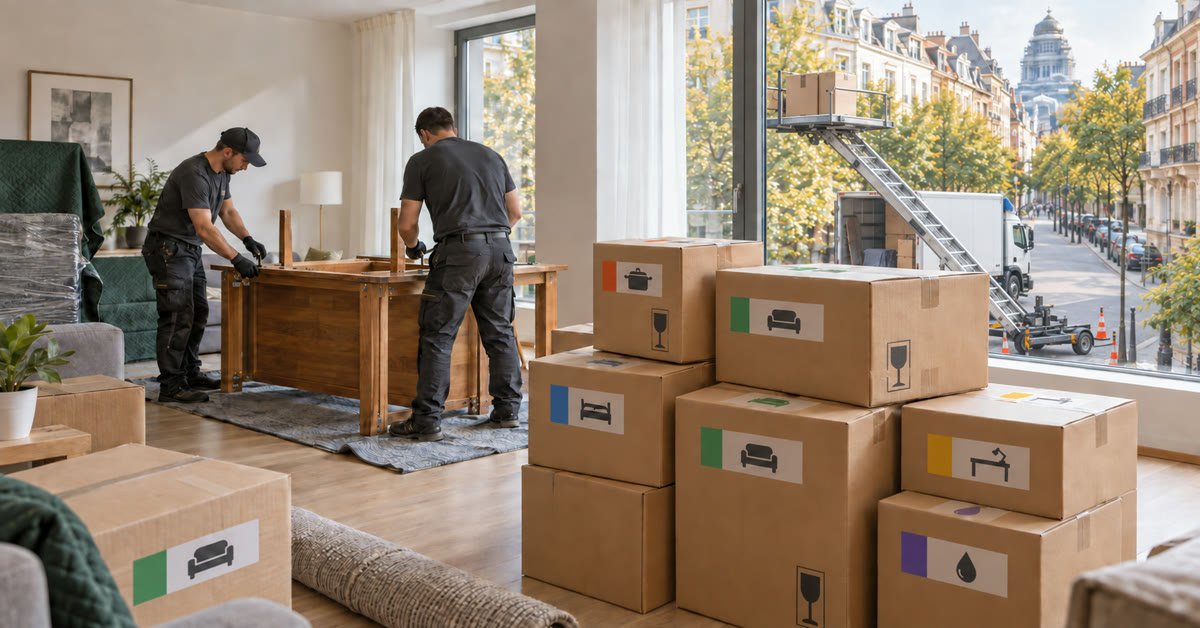
Step 6: Pack and label thoughtfully
Label each box with a category and the main contents. Always keep personal documents (ID cards, diplomas, divorce papers) in your own possession; it saves a lot of searching later.
Step 7: Transport and logical placement in the unit
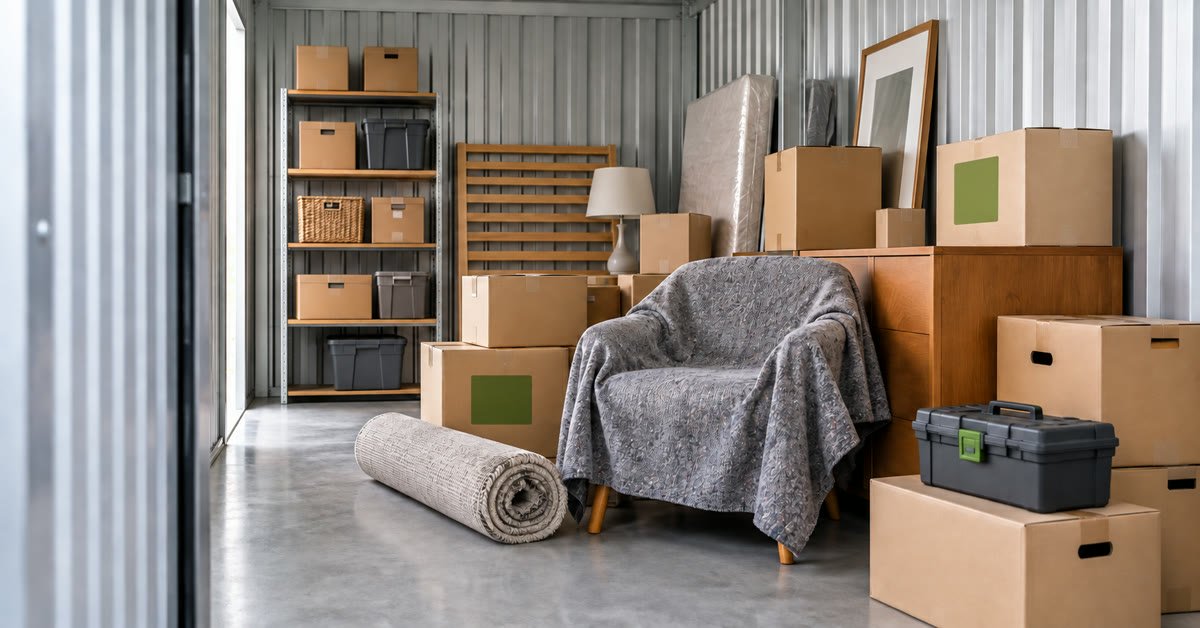
Place heavy furniture at the back and stack boxes from heavy to light. Leave a narrow walkway free so you can easily retrieve an item that is requested later.
Step 8: Winding up and ending the rental
Once the divorce is final and both homes are furnished, plan the clearance of the unit. Flexistock rents flexibly from a few weeks to several months, allowing you to match the rental period to the pace of your proceedings; current terms can be found on the website.
4. Practical checklist for moving day during a divorce
To keep misunderstandings on moving day to a minimum:
Keep documents separate: Keep ID cards, bank cards and notarial and medical documents in your own hand luggage, not in the unit.
Photograph valuable belongings: Photograph valuable furniture before transport; it prevents discussion about transport damage.
Reserve a vehicle for transport: Hire a van or trailer in good time and allow for the parking situation when loading and unloading.
Protect your furniture: Protect wood and fabric during transport with moving blankets and foil.
Test your access code: Test in advance how your access to the site and the unit is arranged.
5. What determines the cost of storing furniture after a divorce?
Divorce means high expenses already; these factors determine the price of temporary storage:
The price depends mainly on:
The volume you need: The more compactly you dismantle and stack, the smaller (and cheaper) the unit.
The rental period: The rental time follows the duration of your proceedings: from a few weeks to several months.
Accessibility and comfort: Ground-floor units with free parking limit loading time and effort.
Insurance: Check whether your household contents insurance covers external storage; ask your insurer if in doubt.
*Rental terms and availability: what self storage costs in Brussels.*
6. Renting a storage unit during your divorce at Flexistock in Brussels South (Anderlecht)
For anyone in the Brussels region who wants to rent a storage unit during a divorce, Flexistock offers calm and professional facilities.
Location: At Grondelstraat 162, 1070 Anderlecht (City Dox, Brussels South), easily accessible.
Security and surveillance: The facility is equipped with 24/7 monitoring, secure access and a well-lit site, so your belongings stand in a protected environment.
Flexible access: Access 7 days a week, including after-hours, so you can drop off and collect whenever it suits you.
Contactless online booking: You reserve and arrange your storage unit fully digitally via the website, without a compulsory visit to the counter.
Ground-floor units, free parking and Wi-Fi: Ground-floor units and free parking for smooth loading and unloading; free Wi-Fi on site.
Route and accessibility: Brussels South (City Dox) location page.
Want to store your furniture safely? Book your storage unit online at flexistock.com contactlessly, or call 0800 300 27 free of charge for discreet advice; for questions, use the contact page too.
7. Frequently asked questions
Can I simply take belongings out of the house and store them while we are separating?
You decide about joint or disputed goods together: removing them unilaterally can work against you legally. If you want to move them to a storage unit, make a joint inventory in advance and record the temporary storage in writing. A private moment with your own belongings is something different from hiding goods; if in doubt about taking items out, first check with your lawyer or mediator.
How do we arrange access to a shared storage unit?
You decide yourself who has access. To limit suspicion, record in writing who has access and that the unit is only opened when both parties are present; your mediator can monitor this.
What happens to the stored furniture if the divorce drags on for a very long time?
Your furniture stays in place as long as the rental continues. Plan temporary storage from a few weeks to several months; check the current terms at flexistock.com and arrange any extension there. Do agree in writing who bears the costs.
What size storage unit do I need for a household from a divorce?
That depends on your inventory: measure your furniture and boxes and let yourself be guided in the choice — the storage unit comparison at flexistock.com gives you direct guidance. Dismantle wardrobes and tables to save volume.
Can my ex-partner demand that the storage unit be opened?
Whether your ex-partner can demand access depends on the concrete situation and any agreements or decisions. A joint inventory helps the consultation; discuss questions about access or an inventory of the marital estate with your lawyer or notary.
Why is Flexistock in Anderlecht a practical choice during a divorce in Brussels?
Flexistock at Grondelstraat 162 (City Dox, Anderlecht) is a neutral location in Brussels South with 24/7 monitoring, secure access, ground-floor units, free parking and Wi-Fi, access 7 days a week (including after-hours) and contactless online booking.
How long can I store my belongings?
From a few weeks to several months, moving along with the pace of your proceedings. The current modalities and terms can be found at flexistock.com.
Can I book contactlessly without involving my partner?
You can book contactlessly online via flexistock.com. Agree in advance who signs the contract and who gets access (see step 5) — certainly where joint or disputed goods are concerned.
_91576245 (1).jpg)