A fire, water leak or evacuation happens without warning. Within minutes, a familiar home becomes a place where every decision matters. A recent incident in an apartment building in Neder-over-Heembeek, where residents had to leave temporarily, is a reminder that this can happen in any Brussels neighbourhood.
Short answer: do not move everything immediately after property damage. Wait for permission from the emergency services, photograph the damage, notify your insurer and separate belongings that need restoration from those that are clean and completely dry. Only the last group belongs in a standard self-storage unit.
1. Safety comes before moving boxes
Do not enter a building that has not been declared accessible. After a fire, explosion or flood, danger is not always visible. The structure may be weakened, electrical systems may be unsafe and some materials may be contaminated.
Follow the instructions of the fire service, police or building manager first. Collect medication, identity documents and essential belongings only when it is safe to do so. People always come before property.
2. Take photographs before moving anything
Once access is allowed, create one simple claim folder on your phone. Photograph every room, affected furniture and visible damage. Take some wide shots as well. They give the insurer and loss assessor useful context.
Then contact your insurer or broker. Ask what you may move, clean or discard. Belgian government guidance on flood damage recommends contacting the insurer quickly and taking photographs. For any incident, your own policy and the instructions of the appointed expert remain decisive.
Record the brand, model and approximate age of important items.
Keep any invoices, warranties or other proof of purchase.
Do not discard valuable property without the insurer’s approval.
Keep emails, quotations and photographs together in one folder.
3. Sort belongings into four groups
Good sorting prevents dirt and moisture from reaching items that were not damaged. Set up four clearly separated areas:
Do not touch: items in an unsafe area or items that need inspection first.
Needs restoration: property affected by water, soot, smoke, mud or a persistent smell.
Ready for storage: clean, stable, uncontaminated and completely dry belongings.
For disposal: items judged beyond repair, but only after any required approval from the insurer or expert.
Never seal damp furniture in plastic. Moisture will remain trapped. An object that feels dry on the surface may still hold water inside wood, foam or joints.
4. What can go into storage after property damage?
A self-storage unit can hold belongings that escaped damage while the home is cleaned or repaired. Suitable examples include dry furniture, intact boxes, washed and dry clothing, clean tableware, unaffected books, tools and undamaged household appliances.
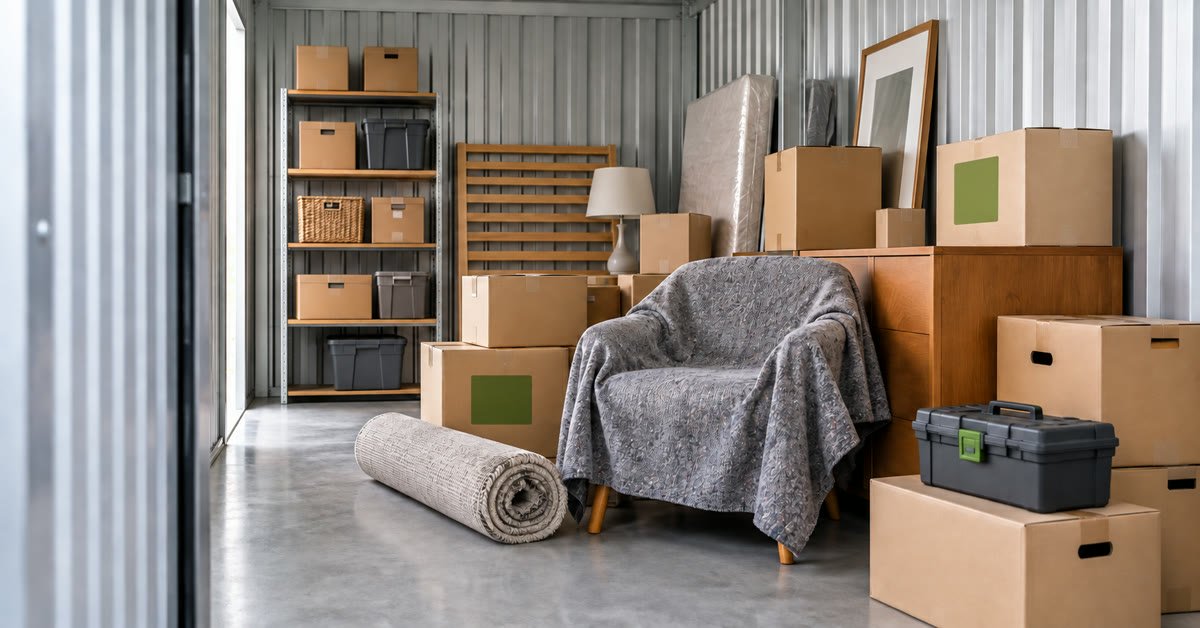
Use breathable covers or moving blankets around furniture. Put fittings and small parts in labelled bags. Use strong boxes and mark the original room and contents. If repairs take longer than expected, you will still find essential items quickly.
Read the practical guide to permitted and prohibited items at Flexistock.
5. What must not enter a standard storage unit?
Self storage is not a drying room or decontamination area. Do not bring in belongings that are still wet, covered in soot or mud, mouldy, strongly odorous or exposed to chemicals. Flammable products, fuel, waste, food, plants and other prohibited goods are not accepted.
Have any uncertain item assessed before transport. This protects your other belongings, the vehicle, the facility and neighbouring units.
6. Recon Damage and Flexistock have different roles
Several trades may be needed after property damage. Use a specialist for damage assessment, technical cleaning, drying and restoration. Recon Damage works throughout Belgium after fire and water damage for homes and businesses. Its services include technical cleaning, decontamination, building drying and renovation.
Flexistock helps at a different stage: once the belongings being kept are clean, dry and suitable for self storage, a temporary unit clears space for the work. Cleaning teams and contractors can then move freely without shifting the same furniture every day.
7. Choose a practical unit, not just enough floor area
Start with the largest items. Measure cabinets, sofas, mattresses and appliances that will be kept. Then count the boxes. Allow a narrow aisle if you may need clothing, documents or equipment before the repairs are finished.
Load in reverse order: the things you need first go in last. Put heavy boxes at the bottom, fragile items higher up and keep labels visible. A photograph of the finished unit and a short inventory on your phone are often enough to stay organised.
8. Check insurance before transport
Ask your insurer whether transport, temporary storage and removal costs are covered. The answer depends on the policy and the incident. Request written confirmation before committing to substantial costs.
Insurance linked to a storage unit does not repair damage that was already present. Record the condition of belongings before they enter, and check limits, exclusions and evidence requirements. Read about insurance at Flexistock and discuss questions with the site manager.
9. A simple plan for the first hours and following days
During the first hours
Follow the emergency services and do not enter without permission.
Notify your insurer or broker.
Collect identification, medication, phone and essential documents.
Start a photographic record as soon as it is safe.
During the following days
Have affected belongings assessed by a specialist.
Keep clean, damp and contaminated items apart.
Estimate space only for the items that will actually be kept.
Arrange transport for clean and dry belongings only.
Record every expense and each item moved.
10. Temporary storage after fire or water damage in Brussels
Flexistock Brussels South is located at Rue des Goujons 162 in Anderlecht. The facility offers several unit sizes, free parking and extended access from 6:00 to 23:00, seven days a week. The normal minimum rental term is one month, which suits many cleaning and restoration projects.
Compare available units and current prices in Brussels, learn about furniture storage or contact the Flexistock team for help choosing the right size.
Frequently asked questions
Can I store furniture after water damage?
Yes, but only after it has been checked, cleaned and dried completely. Furniture that is still damp or contaminated must be treated by a professional first.
Will insurance pay for the storage unit?
That depends on your policy and the circumstances. Ask your insurer for written confirmation of covered costs before booking.
How long will I need storage?
Cleaning, drying and repair work determine the real duration. The normal minimum term at Flexistock is one month. Avoid setting an optimistic move-out date until the repair schedule is confirmed.
Does Flexistock clean damaged belongings?
No. Flexistock provides the storage space. Cleaning, drying and restoration should be carried out by a specialist such as Recon Damage.
.jpg)
.jpg)